
Searching St. Mary Parish Civil Dockets
For a St. Mary Parish civil case, begin with the St. Mary Parish Clerk of Court and its St. Mary ESearch tool. That service is the local route to a civil or probate Verdict Index plus docket history. It suits a released 16th Judicial District Court of Louisiana civil case. The public screen shows only User ID and Password fields. Whatever search options sit behind the login are separate from what a guest can use. So treat the open page as the real starting point. One more caution: the online history is not the official record. Per the clerk, civil pleadings are not available as images in ESearch.
Got a case number? Use it exactly as printed on a petition, notice, or earlier order. If not, collect the parties, the filing date, the court, and the type of case. Those details let the clerk narrow a request. St. Mary publishes no exact civil case-number pattern and no public glossary of screen codes. Before you call, figure out where the case lives: 16th JDC, Morgan City City Court, Franklin Third Ward City Court, probate, or another court with its own record desk.
- Read the existing notice for the named court, case number, caption, and filing date.
- Use St. Mary ESearch for a released district civil or probate history.
- Match the parties, court, and filing date before treating a result as the right case.
- Read the latest event and ask the court division to confirm an upcoming setting.
- Request a plain or certified copy from the clerk or city-court custodian when the docket points to a needed filing.
St. Mary Parish Civil Docket History
St. Mary ESearch works as a local index and docket-history service. It covers civil and probate matters. It serves up the Verdict Index and the docket history. But an online entry never replaces the official public record. A second layer exists at the state level. The Louisiana Clerks' Remote Access Authority (LCRAA/eClerksLA) provides remote-access infrastructure for participating parish clerks. The two systems are distinct. So confirm the record category and St. Mary availability rather than assuming a statewide search covers each district-court filing.
Read a civil docket result as a trail of events. A petition opens the file. Citation and service show the case moving, not a decision on the merits. Later you may see an answer, exception, motion, setting, signed order, judgment, or post-judgment filing. The newest event date matters most. Yet a visible setting can be wiped out by a later continuance or reset. The division or clerk remains the reliable source for the operative setting.
One change is coming for filings. The clerk's CottFile transition notice explains that civil and criminal e-filing moves to CottFile. The effective date is July 16, 2026.
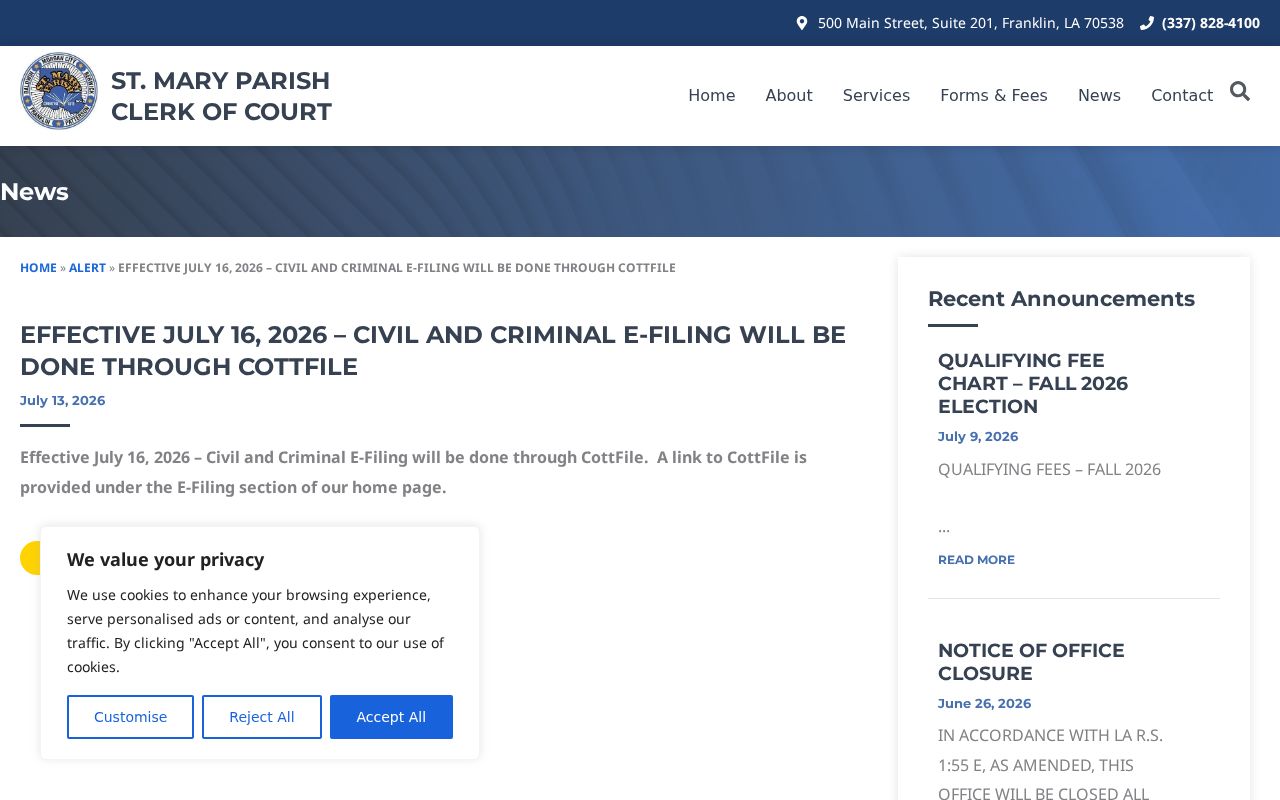
That filing change may shape how a new case enters the clerk's index. It does not turn the filing system into the official civil docket. The docket itself stays with the court.
Inside a St. Mary Parish Civil Docket
Start with the basics on any St. Mary Parish civil docket entry: case number, court or division, caption, filing date, and case type. The parties usually appear as plaintiff or petitioner against defendant or respondent, and counsel or an intervenor can show up in the docket or a related record. Expect events like the opening petition, citation or service, an answer, motions, orders, settings, a judgment, and filings that come later. When exact wording matters, ask the clerk for the filed instrument itself.
| Case number | Use the identifier printed on the court notice; no verified St. Mary civil format was published. |
|---|---|
| Court and division | Identifies the 16th JDC division or separate city-court venue that controls the case. |
| Caption and parties | Names the parties and helps distinguish similar cases. |
| Filing date and case type | Places the petition or claim in time and describes the type of civil matter. |
| History and result | Lists events such as service, motions, settings, orders, judgment, or post-judgment activity. |
Note: A St. Mary Parish docket entry may point to a judgment or order, but it does not give you the civil pleading image in ESearch.
St. Mary Parish Civil Pleading Images
Here is the biggest local catch. The ESearch history for civil, criminal, and probate cases does not include the pleadings or the images. So an online docket entry is not the filed petition, the answer, an exhibit, or a signed order and judgment. It cannot prove what any of those papers say. What the entry does give you is a case number, filing dates, and a document trail. When you need the actual paper, contact the St. Mary Parish Clerk of Court and ask whether it is public, what copy format the office provides, and what the fee is.
Electronic filing runs through CottFile's official entry point. That official page handles e-filing, not public viewing. It is no substitute for the civil docket history or the clerk's document file.
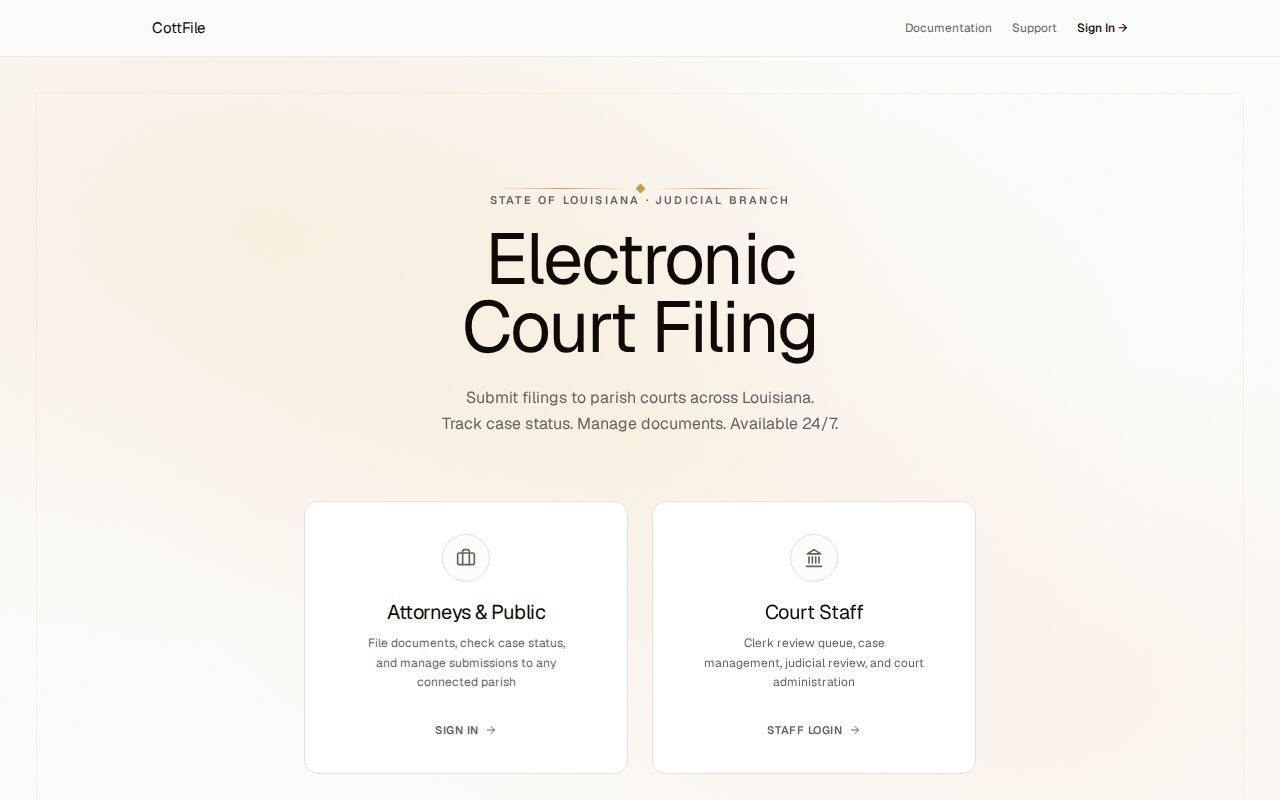
Keep the two routes straight: a filing platform moves papers in, while a docket viewer is what lets the public read the civil record.
Civil Case Types on the Docket
The 16th JDC handles general civil work across St. Mary Parish. The parish clerk keeps the district civil record. On the civil docket you may see claims over agreements, injuries, property, and family matters. Probate and judgment enforcement show up too. The label on a docket entry does not settle the dispute by itself. For what was requested and what the court decided, read the filed petition and the later order.
- Contract, account, and other claim-for-money disputes.
- Personal-injury and other tort claims.
- Property, title, succession, and probate matters.
- Family-court filings and hearing-officer proceedings, subject to applicable access limits.
- Judgment enforcement filings such as a garnishment or satisfaction.
Civil dockets in St. Mary Parish record outcomes in shorthand. You may see terms like default judgment, nonsuit, dismissal, or agreed judgment. Each one means little until you pull the signed order behind it. That document tells you what the court actually decided. Some courts elsewhere label a dismissal for want of prosecution as “DWOP.” Treat that label with caution here. It is not a confirmed St. Mary Parish docket code.
St. Mary Parish Civil Docket Venues
Civil filings in St. Mary Parish split across several courts. The 16th JDC takes the general civil cases. Morgan City and Franklin each run their own civil departments with their own clerks. The City Court of Morgan City caps civil lawsuits at $15,000. Its small-claims docket covers promissory notes, open accounts, and negotiable instruments only up to $5,000, and civil matters there are usually set Wednesday mornings around 9 a.m.
The Franklin Third Ward City Court is a court of record for Ward Three, and its civil department handles small claims, petitions, evictions, and garnishments. Let the case caption and venue tell you where to send a request. Do not assume a mayor's court holds ordinary civil matters or shows up in the parish ESearch; those courts handle municipal-ordinance cases, not a general civil docket.
| Venue | Confirmed civil scope | Record route |
|---|---|---|
| 16th Judicial District Court | General civil jurisdiction in St. Mary Parish. | St. Mary ESearch history, parish clerk, and division calendar contact. |
| Morgan City City Court | Civil suits to $15,000 and limited small claims to $5,000 in stated categories. | Contact the Morgan City court clerk for that court's record. |
| Franklin Third Ward City Court | Small claims, petitions, evictions, and garnishments for Ward Three. | Contact the Franklin court directly for its civil record. |
Civil Docket Settings and Hearings
A civil setting only tells you a court event was scheduled, not that it happened. A St. Mary Parish civil docket can show several things. You may see a hearing date or a trial setting. You may also see a motion, a status event, or a new date after a reset. Read the entries in order. Watch for what came later: a continuance, a reset, a ruling, or a judgment. The notice of setting just puts the matter on the calendar. A later order or minute entry is what establishes the result. If a court date matters to you, keep the original notice. Then call the assigned division to confirm which setting is current.
The Division B page gathers civil-calendar information and transcript-request resources in one place. Its calendar fields can be limited when you are not logged in. A call to the court or division still works when the online calendar leaves you stuck. Transcript requests go through the court reporter channel, not the clerk. The clerk handles certified copies of docket entries and judgments instead. For civil calendar and court-reporter resources, the Division B page is the local place to check.
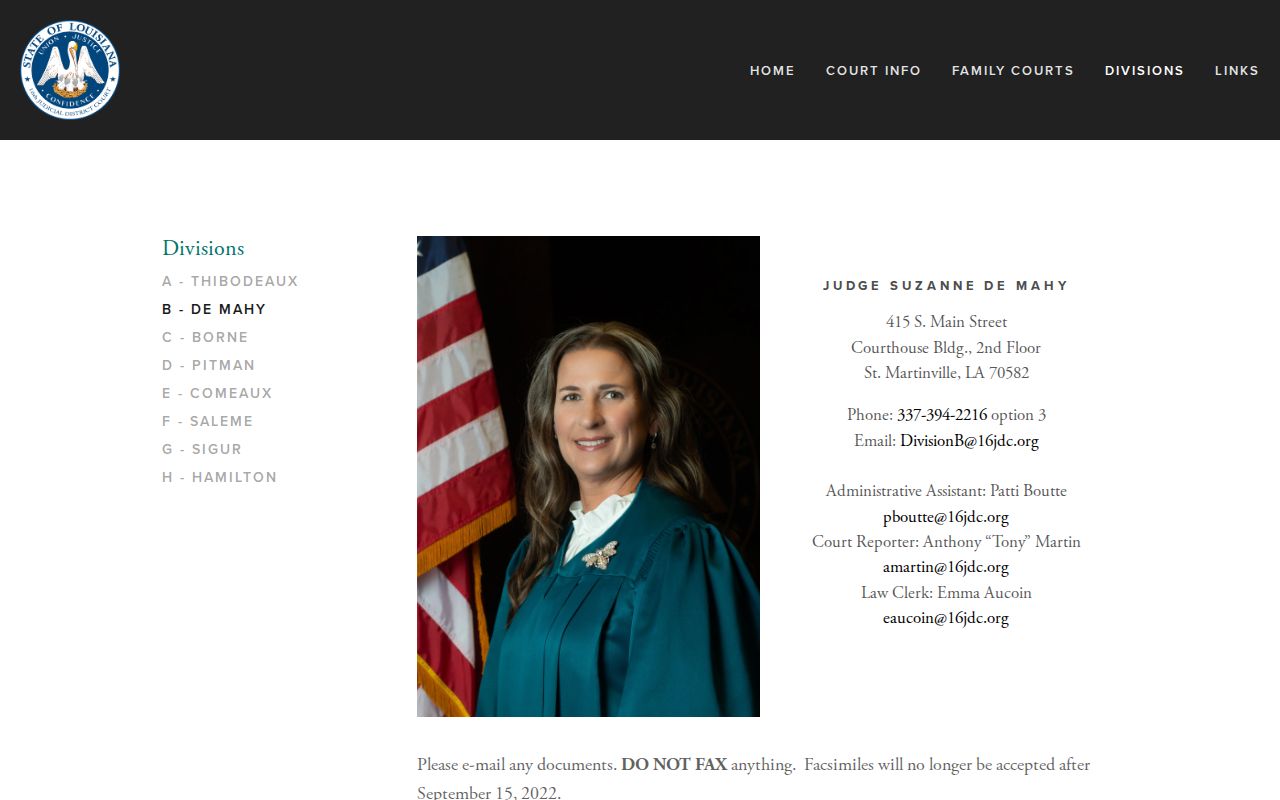
Division-specific details are worth checking whenever a St. Mary Parish civil docket history and a later calendar entry seem to disagree. The division can tell you which record reflects the real setting.
When a St. Mary Parish Civil Case Is Not in ESearch
An ESearch result that comes back empty has several possible causes. The case may sit outside the district-court index. Or it may not be released or indexed yet. It might be older, archived, or restricted. A search with incomplete details can also miss a filing. Morgan City and Franklin each have their own city court. A case filed there will not appear in this district-court docket search. One important caution: a no-result does not prove a case was never filed. Verify the venue first, then use the clerk's request channel to confirm.
- Compare the court name, caption, and case number against the notice or order in hand.
- Use the exact number or party names as written, without inventing a St. Mary civil prefix.
- Ask the parish clerk whether a 16th JDC record is unreleased, unindexed, archived, or restricted.
- Contact Morgan City or Franklin when the case was filed in one of those courts.
- Request a plain or certified copy only from the court clerk that maintains the file.
Civil Docket Access Rules
The St. Mary Parish Clerk of Court is the legal custodian of district court civil records. La. C.C.P. art. 251 generally makes court records open for inspection and copying during required office hours, unless another rule limits access. It also authorizes certified copies from the custodian. La. R.S. 44:31 sets out the general Louisiana right to examine and copy public records, subject to exceptions.
Access point: ESearch helps locate a released civil docket history. The clerk's counter, mail, phone, or written request is the route for the official file, a paper not shown online, or a certified copy. City-court civil matters must be requested from the city-court custodian.
A civil filing in St. Mary Parish can be sealed, redacted, or otherwise restricted by court order. A bare case shell, a thin docket history, or a no-result on a docket search proves nothing about a confidential or unindexed court record.
St. Mary Parish Civil Copy Requests
Requesting a civil file works best when you come prepared. Give the clerk the court, the case number, the caption, the document type, and the date if you know it. Say what copy you want. Leave a way to reach you. Be clear about what you are asking for. It may be inspection only, a plain copy, or a certified copy. The clerk can point you to the right department. The office can also confirm the record is public and quote a current estimate. The clerk's forms and fees page posts the current civil and advance-deposit fee materials. Just remember that one published fee does not fit every court pleading.
You can inspect district-court civil records in person at the clerk's office. Mail and phone requests go through the official clerk contact route. Use the same case details. Morgan City civil records work differently. The official court accepts written public-record requests. It promises a 72-hour response and charges $2 per reproduced page. Franklin civil matters run through the Third Ward City Court's local office. These separate channels matter when a civil case never shows up in the parish district history.
Note: Ask for a fee quote before you pay. Record type, certification, and delivery method can all change the cost of a civil docket copy.