
Searching St. Mary Parish Criminal Dockets
For district criminal cases, the St. Mary Parish Clerk of Court points users to St. Mary ESearch. That service carries the criminal Verdict Index and the docket history. Copy the case number exactly. Take it from a summons, minute entry, or court notice before you begin. Searching by name may require a subscription. The public login screen shows only User ID and Password fields. The clerk cautions that the online history is not the official public record, and it does not display criminal pleading images.
Check the venue before treating a missing result as final. Felonies and general district criminal matters sit with the 16th Judicial District Court of Louisiana. The parish clerk serves that court as well. Misdemeanors, traffic tickets, and ordinance cases differ. They may belong to a city court or a mayor's court instead. Trust the case number, court name, and division printed on your paperwork over any guessed format. St. Mary has published no criminal case-number grammar.
- Read the notice or prior record for the case number, court, division, and defendant name.
- Open St. Mary ESearch and use the criminal index or docket-history access available to the account.
- Match the caption, court, and event dates before relying on the history.
- Check the newest entry, then confirm a live setting with the court division when timing matters.
- Ask the proper clerk for a minute entry, judgment, or certified copy when the actual document is needed.
St. Mary Parish Criminal Index Limits
Think of ESearch as an index and history tool. It is not a scanned criminal case file. It can locate a released case and lay out its chronological docket history. What it will not give you are images of criminal pleadings. That gap matters whenever a history cites an indictment, motion, plea, or sentence. The docket line names the event. The filed paper or certified minute entry comes from the custodian. The statewide Louisiana Clerks' Remote Access Authority (LCRAA/eClerksLA) adds a remote-access layer. Participation and criminal-minute coverage vary by search.
Separately, the clerk is moving civil and criminal e-filing to CottFile for civil and criminal e-filing, effective July 16, 2026. That change is about filing workflow only. CottFile is not a public criminal docket viewer. It does not replace the clerk as custodian. New filings also take time to be released and indexed. An empty result calls for a venue check, not an assumption about the case itself.
The official Division F profile lists a district division with criminal materials. A court-reporter contact is included as well.
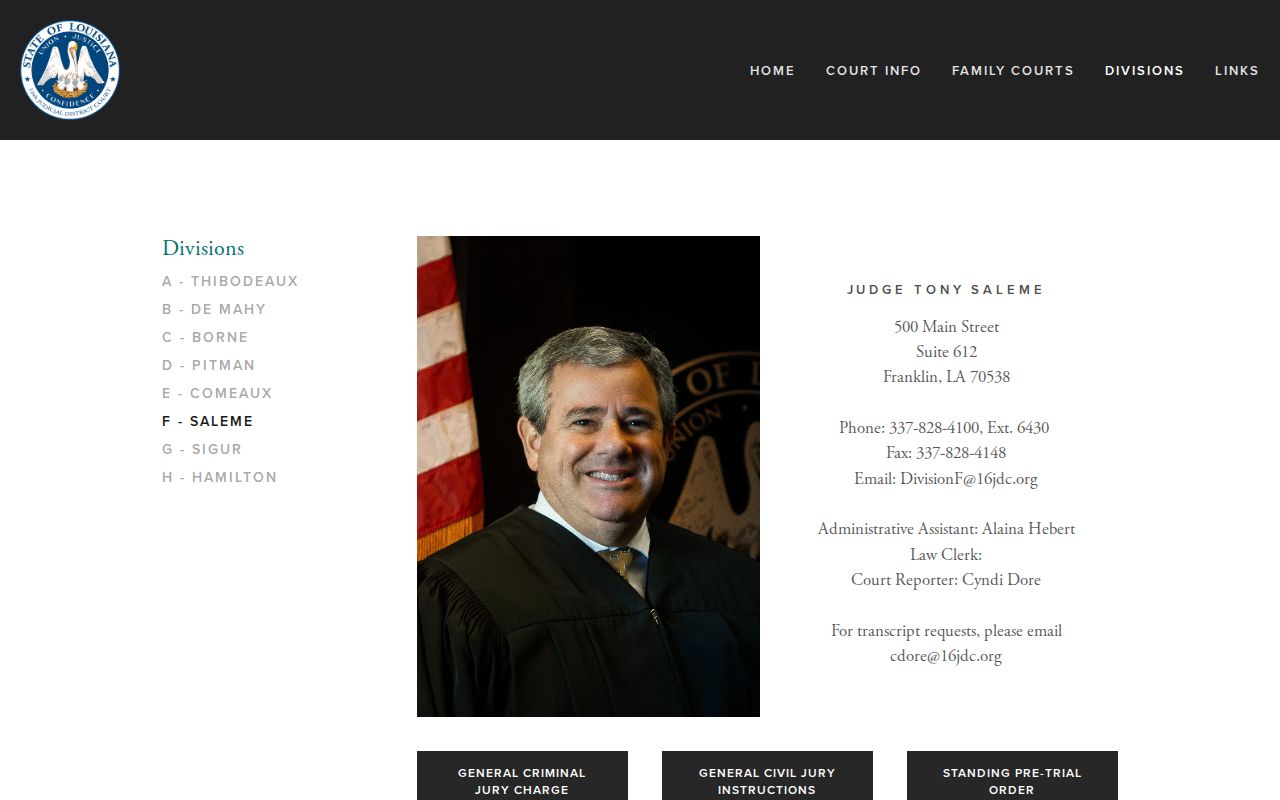
When a St. Mary Parish criminal docket history lists a setting that may have shifted, division pages are handy for confirming current court contacts before you call or visit.
Inside a St. Mary Parish Criminal Docket
A released criminal docket usually opens with the court, division, case number, filing date, caption, and charge information. Events follow in time order. St. Mary has not published the arrangement or code list used in its criminal screen. So copy a case number exactly. Do not rebuild it as a sample code. Start with the oldest event. Then find the latest completed action and the newest future setting. Keep in mind that a scheduled event proves nothing about whether a hearing actually occurred.
| Case number and division | Header identifiers expected in the clerk record; St. Mary has not published a verified local format. |
|---|---|
| Defendant and prosecutor | Identity information may appear in a released minute entry, subject to restriction or redaction. |
| Charge activity | Filing, amendment, or dismissal of a charge can be minute-entry information. |
| Settings and motions | Arraignment, status, motion, trial, and sentencing events may appear chronologically. |
| Result | A plea, adjudication, dismissal, acquittal, or sentence should be checked against the underlying official record. |
Note: A docket history is an event index. A certified judgment or minute entry is the clerk's authenticated record.
St. Mary Parish Criminal Minute Entries
Under La. R.S. 13:5992, district clerks must give the public electronic access to criminal minute entries or summaries for cases filed after January 1, 2020, with protected matters carved out. The statute defines a broad record. It covers arrest or summons information, custody and bail decisions, charge filings and changes, motion or status hearings, trial or adjudication, guilt decisions, sentencing, dates, the judge, and the prosecutor. It stops short of requiring document images. That matches the St. Mary ESearch limitation.
A minute entry records what happened in court, or summarizes it. It is not the same as every document filed in the case. A sentencing entry, for instance, can show that sentencing occurred. The detailed sentence or order still has to be requested from the St. Mary Parish Clerk of Court. Division contact details and current court materials also appear on the official Division C page. That page describes a St. Mary division that also handles juvenile-court responsibility.
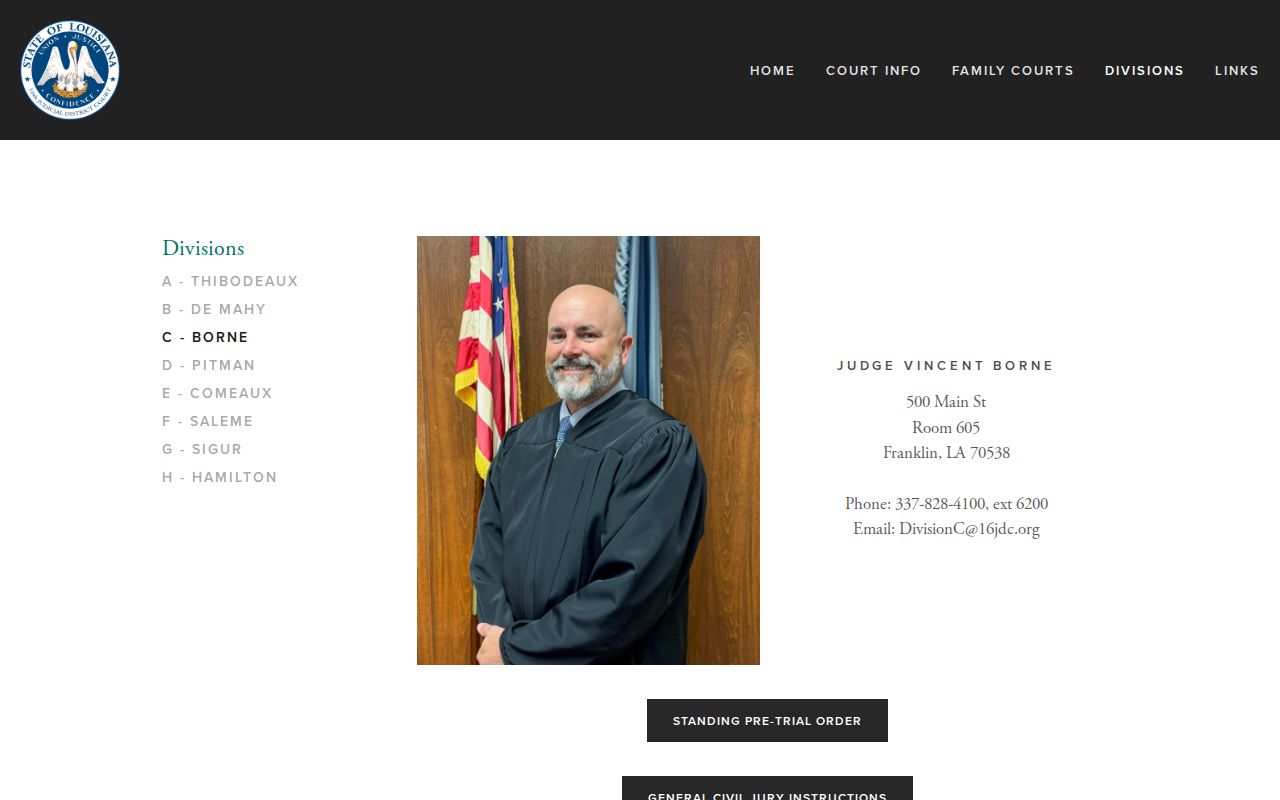
Knowing the division helps separate an ordinary adult criminal docket question from a juvenile matter governed by different access rules.
How a Criminal Case Moves
Criminal docket history usually opens with a complaint, summons, indictment, or information. At arraignment, the history may record the charge and custody action. Counsel or plea posture and a next date may appear too. Pretrial entries can include motions, status conferences, and orders. A later line may reflect a plea, trial, adjudication, dismissal, acquittal, or sentence. The label is not the ruling itself. It is no substitute for the underlying order, especially when the result changes the next step in the case.
Docket flow: Charge initiation → arraignment → pretrial motion or status setting → plea or trial → disposition and sentence → appeal if taken.
Appeals out of St. Mary Parish district court go to the Louisiana First Circuit Court of Appeal. The notice or order of appeal may show up in the district history. The original record stays put, though. It stays with the parish clerk. The clerk keeps it even after the appeal is lodged. Confirm current dates through the 16th JDC calendar and division information. Do not guess from an older setting on the docket.
St. Mary Parish Criminal Docket Venues
Venue decides where a St. Mary Parish criminal docket search should start. Felonies and general district criminal matters belong to the 16th JDC. The St. Mary Parish Clerk of Court keeps the district criminal index, the minute history, and the court file itself. City courts are separate. The City Court of Morgan City splits its work into criminal and traffic, juvenile, and civil or small-claims divisions, and the Franklin Third Ward City Court posts a criminal and ticket department.
| Likely matter | First record custodian | Practical search route |
|---|---|---|
| Felony or general district criminal case | St. Mary Parish Clerk of Court | ESearch history, clerk request, and 16th JDC division confirmation. |
| Morgan City misdemeanor or traffic case | Morgan City City Court | Contact that city court for its public record and setting. |
| Franklin city criminal or ticket case | Franklin Third Ward City Court | Use the court's local contact route, not a parish no-result alone. |
| Municipal-ordinance matter | Relevant mayor's court | Confirm the issuing authority and named court on the citation or notice. |
Courts That Hold Criminal Dockets
Two offices carry most of the load. The 16th JDC and the St. Mary Parish Clerk of Court handle district criminal matters. The court's calendar and division pages show current settings, while the clerk keeps the official record. City courts and mayor's courts do not feed every matter into the parish criminal index. A municipal citation or misdemeanor charge can sit with a different custodian. That holds even when the event happened inside St. Mary Parish.
Morgan City holds criminal and traffic arraignments on Tuesdays and trials on Thursdays. A posted court day is not proof of the setting in any one case, though. Franklin and the mayor's courts need court-specific confirmation too. Keep the original notice. Then ask whether a continuance, reset, bond action, or transfer now controls the next appearance on the docket.
When St. Mary Parish Criminal Cases Are Missing
An empty ESearch result can mean several things. The case might sit in a city court. It could be newly filed but not yet released or indexed, or old, archived, sealed, expunged, juvenile, or filed under a name variation. A plain search mismatch is also common. Never read a no-result screen as a ruling on the case. Send a short, precise request to the office that actually holds the St. Mary Parish court record and let the clerk answer.
- Compare the court name and case number with the original citation, summons, or minute entry.
- Try the exact number and the name as printed, without inventing a prefix or division code.
- Ask the parish clerk whether the district record is unreleased, unindexed, archived, or restricted.
- Contact Morgan City, Franklin Third Ward, or the listed mayor's court when the paper names that venue.
- Request the needed public minute entry or certified document from the custodian after confirming access.
For a full document request, list the court, case number, caption, date, document sought, copy type, and return contact. The clerk can quote the charge before payment.
Sealed Dockets and Public Access
Louisiana's Public Records Law grants a general right to inspect and copy public records. Court access still follows court-specific confidentiality rules on top of that. Under La. C.C.P. art. 251, the clerk serves as custodian of the district court record. The clerk may issue certified copies. ESearch is handy for tracing a docket history. It is not the official record, and it shows no criminal pleading images. For actual documents, go to the counter or mail a written request. You can also call the clerk or reach the city-court custodian directly.
Louisiana access rules:
La. R.S. 44:31 generally allows adults to inspect and copy public records unless an exception applies.
La. R.S. 13:5992 provides electronic criminal minute-entry access for covered cases without requiring images.
La. C.Cr.P. art. 973 makes an expunged arrest or conviction record confidential and no longer public, subject to statutory exceptions.
Note: A restricted result can signal a legal limit, while a no-result can just mean indexing or venue.
St. Mary Parish Juvenile Criminal Records
Juvenile records demand a different mindset. Louisiana Children's Code art. 412 keeps juvenile proceedings and records confidential. Exceptions exist only for disclosures the law or a court allows. A juvenile matter in St. Mary Parish may run through the parish juvenile or family structure. It may also sit with a city-court juvenile division. Do not search it like a released adult criminal docket. A missing public result proves nothing about whether a proceeding exists. The published text of Children's Code article 412 is the official source for the confidentiality rule.
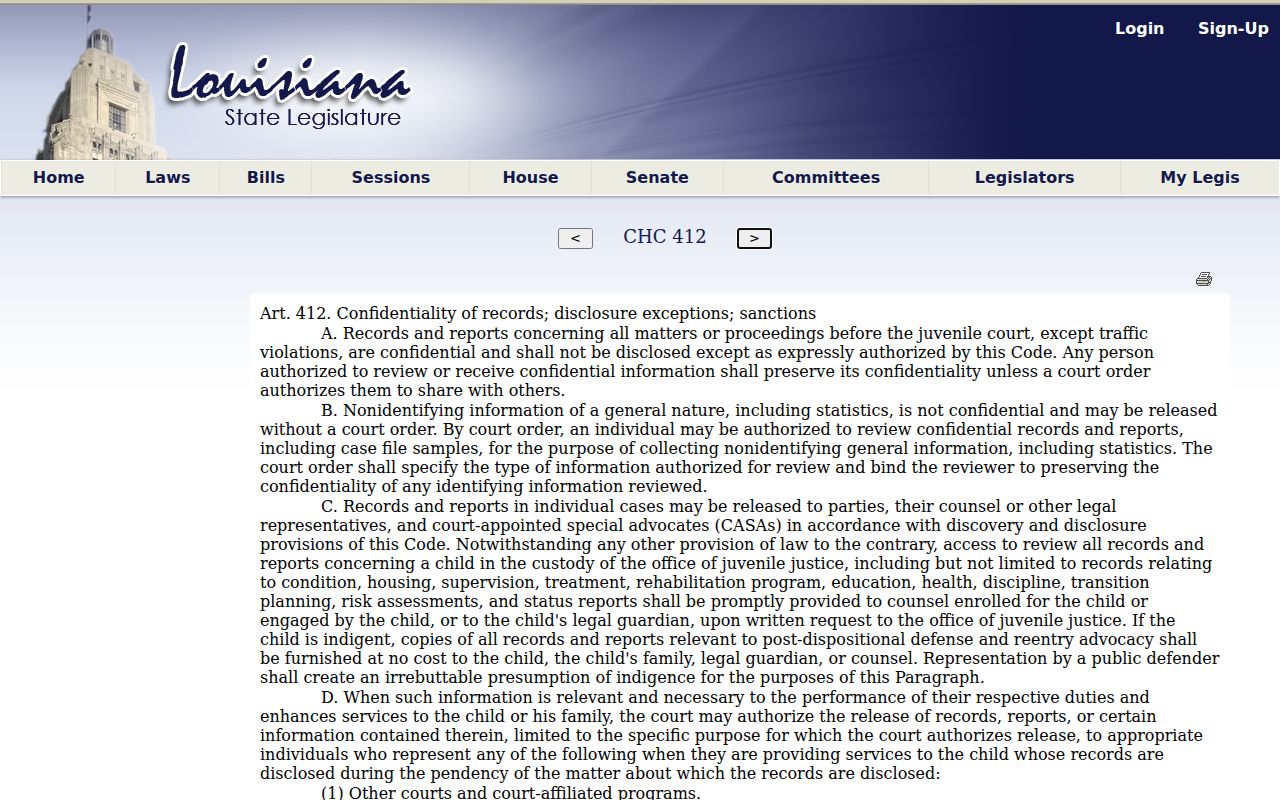
Any access question on a juvenile, sealed, or expunged matter goes to the correct custodian. That office can explain whether a party, counsel, or court order is required.