
Getting St. Mary Parish Court Records
Begin at the St. Mary Parish Clerk of Court. That office keeps the civil, criminal, probate, and family records of the 16th Judicial District Court. Its local ESearch service shows released index entries and docket history, but the clerk counter is where the official file lives. Lower courts run separately. Morgan City City Court, Franklin Third Ward City Court, and the Baldwin, Berwick, and Patterson mayor's courts each maintain their own case files. So read the court named on your citation, caption, or notice before you send anything.
- Identify the court, case number or caption, document type, and approximate filing date.
- Use St. Mary ESearch for released 16th JDC index and docket-history information, then save the exact identifying details.
- For a district-court file, inspect or request it at the clerk counter, call the civil, minute, or recording department, or use the official web contact channel.
- Mail a written request to the clerk with the case details, plain-copy or certified-copy choice, return contact information, and delivery preference.
- Use LCRAA or eClerksLA only as a participating-clerk or land-record route, and use CottFile only for filing workflow, not certification.
- Ask the correct custodian for a fee estimate, access status, and expected delivery method before submitting payment.
The Louisiana Public Records Law opens a door, but it cannot move a city-court record into the parish clerk's hands. Each office answers for its own filings. When you write a request, name the specific record you want rather than asking for every document tied to a name.
St. Mary Parish Court Record Custodian
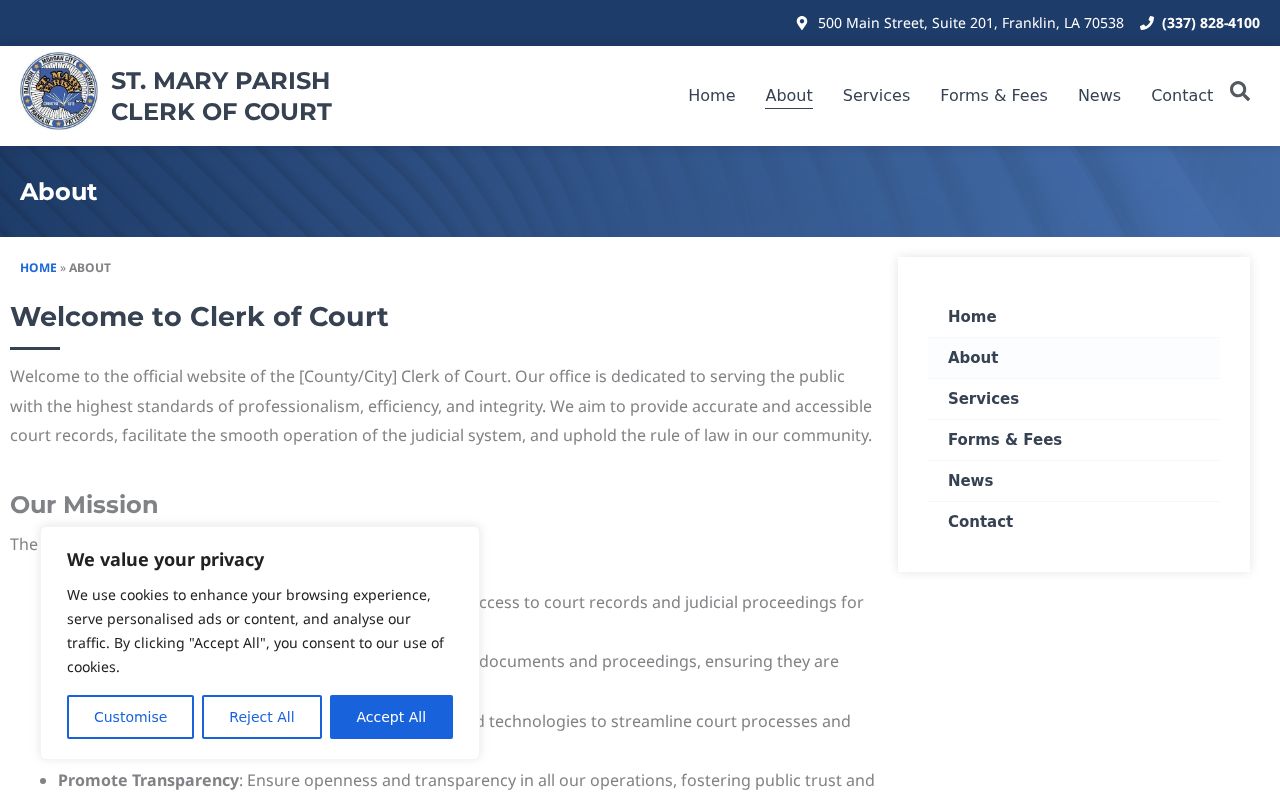
For the parish district court, the clerk does far more than run searches. Louisiana Code of Civil Procedure article 251 names the clerk the legal custodian of the records. During required office hours, the law permits examination, copying, photographing, or memoranda unless another statute limits access. The same article lets the clerk certify copies. That is why a portal result can find a case, yet a certified judgment or order must come from the clerk who maintains it. The clerk lays out its court-record services on the official About page.
Transcripts follow a different route. Ask the court reporter, not the clerk. The Division F court page posts reporter and transcript contact details, and Division B offers a transcript-request form. Keep in mind that a transcript is not a clerk-certified docket or judgment.
Court Record Types
Not every St. Mary Parish court record is the same product. A docket history lists what the clerk has indexed. Behind each entry may sit a petition, indictment, motion, order, judgment, or exhibit. A certified copy carries the legal custodian's attestation. That matters when an official version of a judgment or order is required. Start small. Ask for the least expansive item that answers your question. Then request the filed document if the index alone falls short.
- Released civil, probate, and criminal verdict indexes and docket history
- Filed petitions, pleadings, motions, orders, and judgments
- Criminal minute entries or minute summaries where public access is available
- Probate, family, and district-court civil case materials held by the clerk
- Separate city-court or mayor’s-court citation, misdemeanor, and municipal files
St. Mary Parish Court Record Products Compared
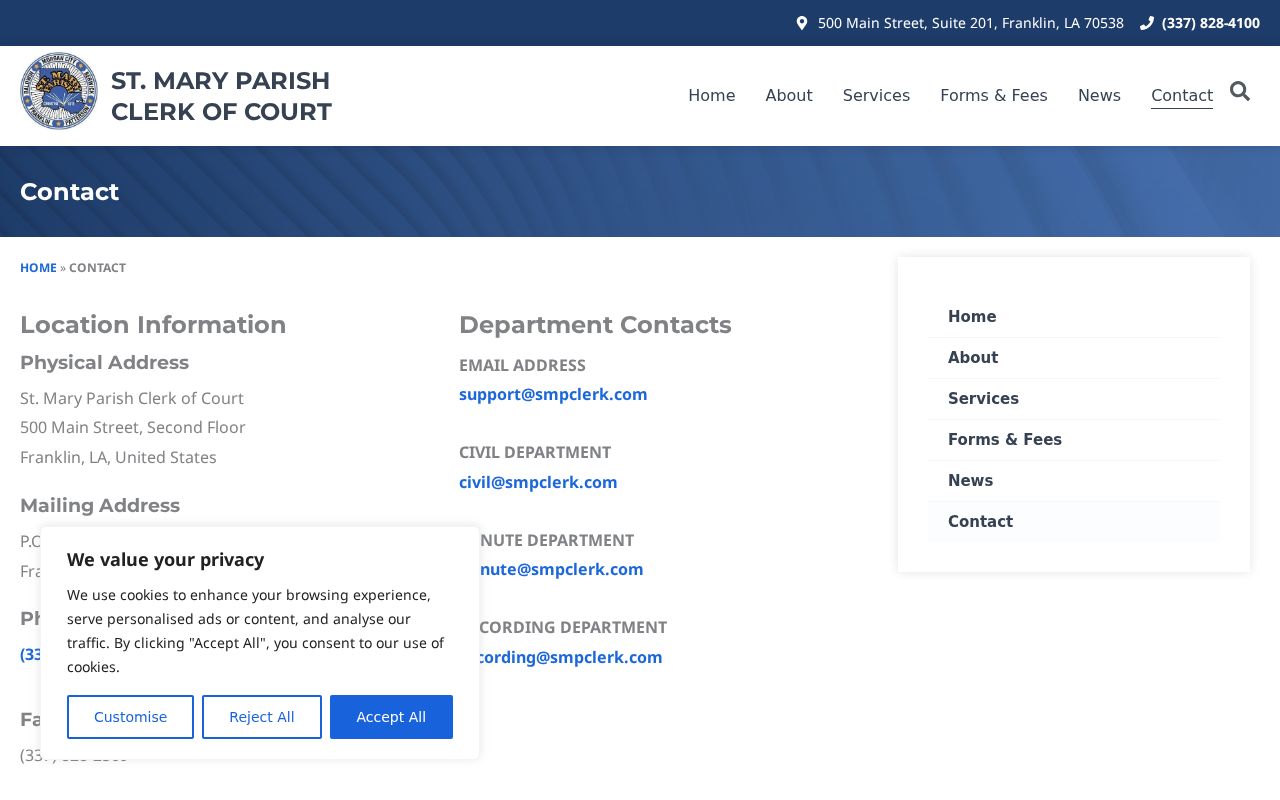
ESearch is a paid local indexing system covering civil, probate, and criminal docket history. It comes with clear warnings. Civil and criminal pleadings are not images there. And the online information is not the official public record. A newly assigned official number may still be waiting for indexing or release. So treat an ESearch result as a locator and chronology. Never treat it as a complete electronic case file. The clerk's official contact information names the departments that can route a record question.
A filed document is the actual paper or electronic item behind a docket entry. A certified copy is that same item, judgment, or record. The appropriate clerk copies and certifies it. Trouble finding a district-court case? The St. Mary Parish case lookup path can help. It can assemble the caption, case number, and court before making a records request.
Inside a St. Mary Parish Court Record
A full St. Mary Parish court record usually holds more than one line. A docket-history search returns just that single line. Expect the venue, division, case number, parties, filing date, claims or charges, and chronological proceedings. Documents and attachments may sit in the file yet stay out of the online index. Access still depends on the record type. It also depends on any restriction imposed by law or court order.
| Case number | The clerk-assigned identifier. A public St. Mary format guide was not located, so use the exact number from a notice or prior record. |
|---|---|
| Caption and venue | The parties, court, division, and case type that identify where the file is held. |
| Docket history | A chronological list of filings, settings, orders, pleas, trials, judgments, resets, or appeals where indexed. |
| Filed documents | Pleadings, motions, signed orders, judgments, and possible exhibits. These are not shown as civil or criminal images in ESearch. |
| Access marker | A restriction, redaction, sealed item, juvenile status, or expungement can limit what is supplied. |
St. Mary Parish Court Records and Land Images
The clerk links eClerk and eClerksLA for conveyance and mortgage images. Those tools serve land-record functions. They are not a shortcut to civil or criminal court pleadings. The clerk's own site keeps the land-image route separate from ESearch docket history. ESearch carries no images for civil or criminal pleadings. Picking the wrong service can hand you a land record when you needed a court-file document.
CottFile stands apart too. Civil and criminal e-filing moved to CottFile effective July 16, 2026, the clerk announced. It serves parties and attorneys as the filing route. It is not an official public-record viewer or a place to order a certified court copy.
Requesting the right product: Ask for an index history when dates and case identity are needed, a filed document when the text of a pleading or order matters, and a certified copy when clerk certification is required.
Fees and Certified Copies
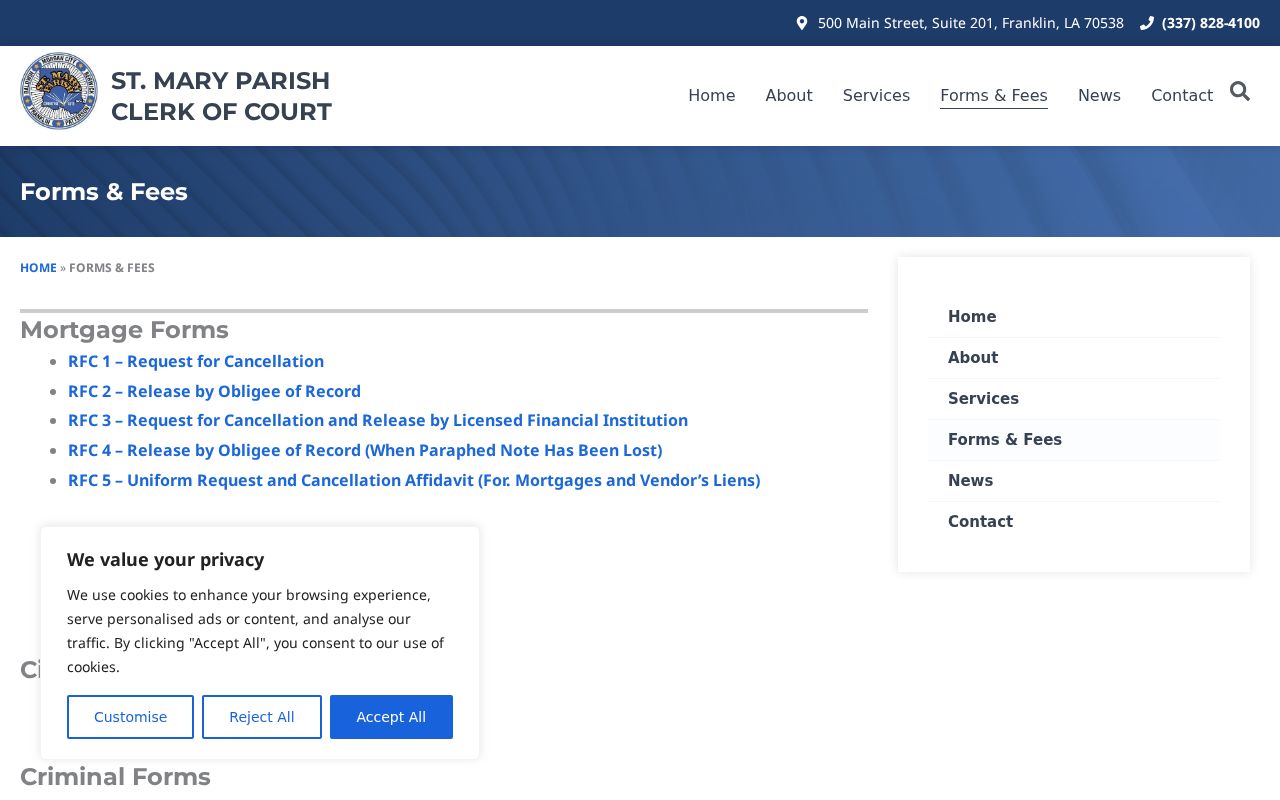
Ask for plain and certified copies separately. The current St. Mary recording schedule lists $2 per page for copies, $10 plus the copy charge for a certified recorded instrument, and $5 plus the copy charge for a certified non-recorded instrument. A $5 fax or email fee also appears. Because those figures come from the recording schedule, confirm how the clerk classifies a requested court document before treating them as a criminal or civil court-file fee. The clerk's Forms & Fees page links the current schedules and department fee materials.
What does a St. Mary Parish court record copy cost? The criminal department posts no fixed copy and certification fee, so ask for an estimate on the specific file before you commit. Morgan City is the one lower court that publishes its terms: $2 per page for reproduced public arrest or civil records, with a response to written requests inside 72 hours.
| Item | Published amount | Use with care |
|---|---|---|
| Recorded-instrument copy | $2 per page | From the current recording schedule. |
| Certified recorded instrument | $10 plus copy charge | Confirm the document is a recorded instrument. |
| Certified non-recorded instrument | $5 plus copy charge | Confirm classification with the clerk. |
| Fax or email | $5 | Confirm whether it applies to the requested court file. |
| Morgan City public-record reproduction | $2 per page | Written request; court states a 72-hour response. |
St. Mary Parish Clerk of Court
500 Main Street, second floor
Franklin, LA 70538
(337) 828-4100
Mail: P.O. Drawer 1231, Franklin, LA 70538
St. Mary Parish Court Record Request Channels
The clerk's office works through three channels. Walk up to the second-floor counter to inspect a file, buy a plain or certified copy, or get help finding the case number. Phone requests start at (337) 828-4100, where staff can route you to the civil, minute, or recording department. Mail goes to P.O. Drawer 1231, Franklin, LA 70538. The clerk also posts a general web contact form and department contacts, though that form is not a formal record-request form.
A strong written request earns a faster answer. Name the parish and court, give the case number or caption, describe the document and date you need, and state the copy type, how you want it delivered, and how to reach you. Ask for a fee estimate too. For an older file, question whether it is released, indexed, digitized, microfilmed, or archived. The clerk publishes no retention schedule and no general turnaround promise for parish court copies.
Sealed Records and Public Access
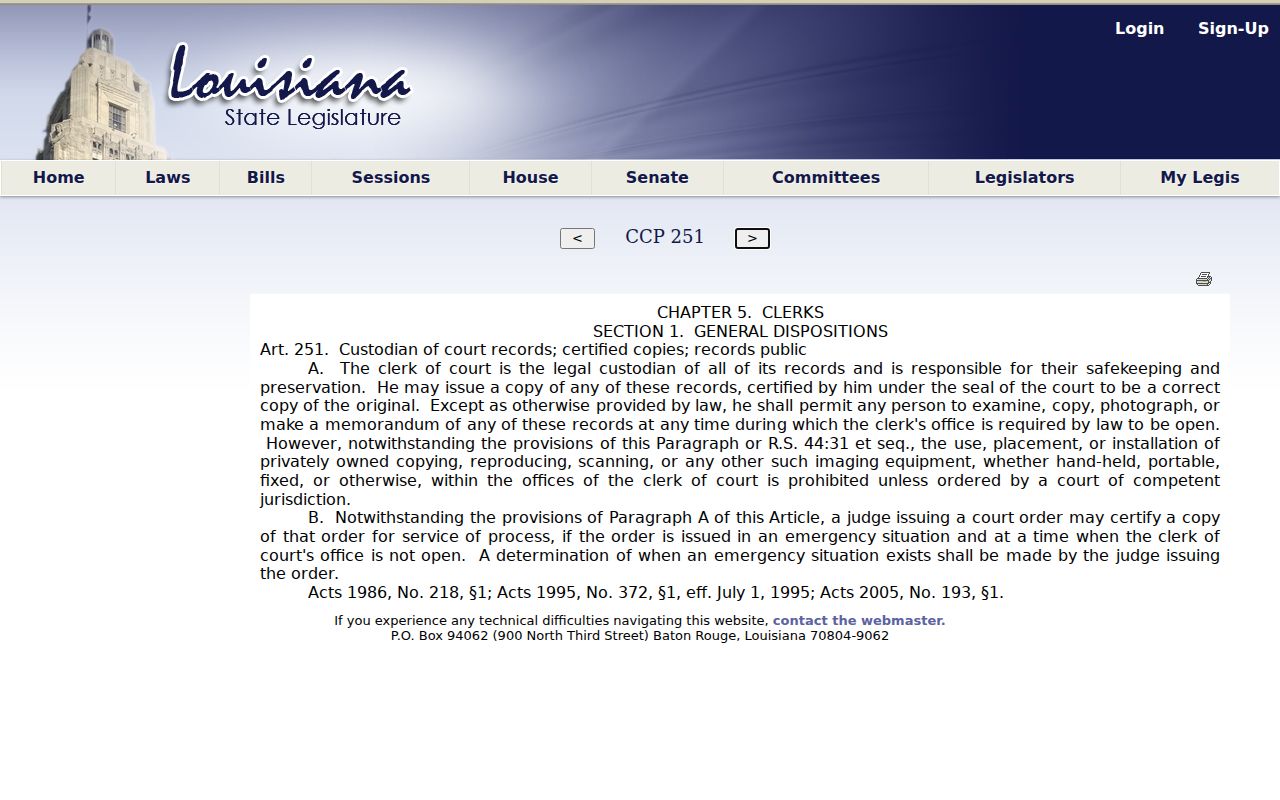
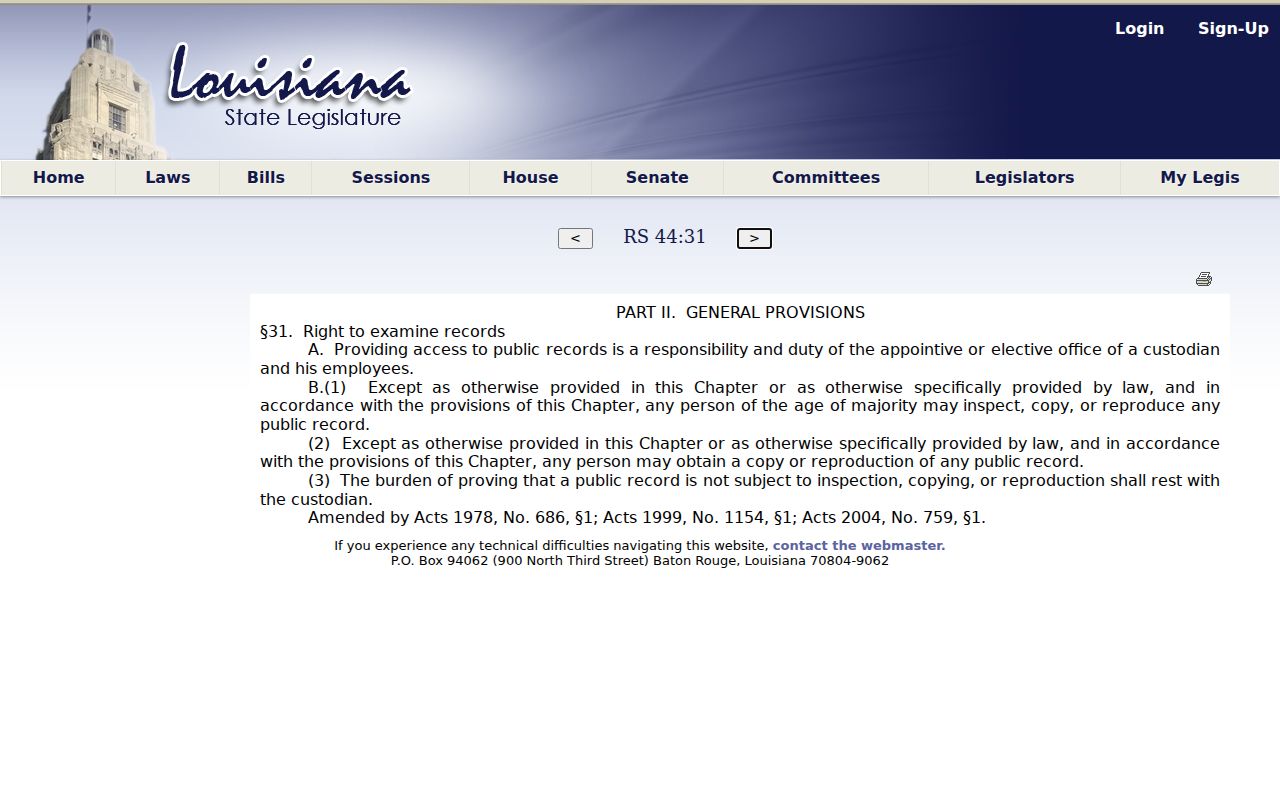
Louisiana's Public Records Law gives you the right to inspect, copy, or reproduce public records, with exceptions. Article 251 places court records in the clerk's custody and gives the clerk the certification role. Neither rule opens every item in a case file. A juvenile matter may be confidential. A sealed filing may be off limits. An expunged adult record is confidential and no longer public under the stated law. The Legislature's official code page publishes Article 251 itself.
An ESearch result that comes back empty can simply mean the record was never released or indexed. It does not prove no court action exists. Never try to work around a restriction. Instead, ask the clerk whether the case is sealed, expunged, juvenile, or awaiting indexing, and whether a court order, party status, or counsel is required for access.
Key rules:
La. C.C.P. art. 251 allows the clerk, as legal custodian, to provide public inspection and copies as law permits and to certify copies.
La. R.S. 44:31 recognizes the public right to examine and copy public records, subject to exceptions.
Children’s Code art. 412 makes juvenile proceedings and records confidential except as authorized; La. C.Cr.P. art. 973 makes expunged records confidential and nonpublic subject to statutory exceptions.
St. Mary Parish Court Record Transcripts and Archives
A transcript and a clerk copy are different documents. The court reporter prepares the transcript of what was said in a proceeding. The clerk keeps the docket and the filed case record. Route a transcript request through the relevant division. Do not ask the records counter to certify one. When you need a judgment, an order, or docket history, tell the clerk the exact item to copy and certify. Louisiana's Public Records Law page states the general access rule, though record-specific restrictions still apply.
Chasing an old St. Mary Parish file? Give the clerk the earliest case date you know, plus any prior case number, and ask whether the file sits in an index, an archive, or another format. That question beats assuming a missing online image means the document is gone. Files outlive their scanned copies.